Nursery · Mattress care · Buying guide
Choosing an Organic Crib Mattress: Breathability, Cleanability, and Fit
A crib mattress has to do several jobs at once: provide a firm, flat sleep surface, fit the crib without hazardous gaps, and stand up to the ordinary spills and laundry of family life. Organic materials and airflow features may matter to a household’s preferences, but they do not replace safe-sleep basics. Here is how to compare construction, cleaning, and fit with a clear eye—and what to check before the first night.
Start with the sleep surface, not the label
Shopping for a crib mattress can feel like learning a new language. Product descriptions may emphasize organic fibers, breathability, waterproofing, stages, certifications, and specialized construction. Each detail can tell you something about materials or care. None, by itself, answers the most important question: does the mattress provide a firm, flat surface that fits the crib properly and can be used according to its instructions?
That order matters. A newborn’s sleep space should be simple and uncluttered. Follow current safe-sleep guidance from your health-care provider and relevant public-health authorities: place an infant on their back on a firm, flat, level mattress covered by a tightly fitted sheet. Keep pillows, loose blankets, stuffed toys, positioners, and other soft objects out of the sleep space. A mattress marketed as breathable does not make additional bedding safe, nor does it replace a firm surface or safe sleep practices.
“Organic” is a description of particular materials or production standards, depending on the claim and the certification behind it. It does not automatically mean that a mattress is safer, more breathable, easier to clean, or a better fit for every crib. Treat the word as a starting point for questions, not as a complete verdict. Look at the exact components, the documentation for any certification, the care instructions, and the mattress dimensions.
The practical goal is not to find a product with the longest list of features. It is to choose a mattress that meets applicable safety requirements, fits the crib snugly, suits your preferences about materials, and has a maintenance routine you can actually follow.
What “breathable” can—and cannot—tell you
Breathability can refer to air moving through a particular layer, a fabric’s weave, or the design of a mattress surface. These are not necessarily the same thing. A breathable cover or pad may be designed to encourage airflow at the surface, while the inner mattress can have a different construction. Ask which component the claim describes and whether the manufacturer explains how that part is intended to function.
Airflow is relevant to comfort and construction, but it should not be interpreted as permission to relax established safe-sleep practices. No mattress feature makes it appropriate to add loose bedding or place an infant in an unsafe position. Nor should a caregiver assume a breathable surface prevents overheating or eliminates risk. A clear, firm, flat sleep space remains central; follow the mattress instructions and guidance from a qualified health professional.
Consider the whole system rather than one appealing adjective. A mattress may include a core, a protective outer surface, and a separate pad or cover. Those layers can affect how the mattress feels, how it is cleaned, and whether the maker permits particular sheets or accessories. If a product uses a removable layer, find out whether it is intended to remain in place during sleep, how it attaches, and how it should be washed. Do not substitute another pad or topper unless the manufacturer and applicable safety guidance explicitly allow it.
Also be cautious with broad claims such as “cooling,” “allergen-proof,” or “safer because it breathes.” Marketing language may describe a material feature without establishing a medical outcome. If your baby has a health condition or you are uncertain about a sleep product, ask a pediatric health professional rather than relying on promotional claims.
For families comparing organic crib mattresses, it is useful to separate two questions: what is the mattress made of, and what performance or safety requirements does it meet? Organic certification can help explain how certain materials were grown or processed under a defined standard. It does not, on its own, establish every aspect of mattress safety, durability, or fit. Read the certification scope and identify the specific component it covers.
Firm support is a functional requirement
Infant sleep surfaces should be firm and flat, not plush, deeply cushioned, or shaped to cradle the body. A firm mattress should retain its shape and should not form a hollow when a baby lies on it. A manufacturer may offer different firmness characteristics for different stages or products, so read the instructions carefully and confirm which side or configuration is intended for an infant.
Do not judge firmness by pressing a mattress once in a showroom or by comparing it with an adult bed. Check the product’s specifications and relevant compliance information, and use it only with the crib and setup for which it is designed. A mattress that seems soft, damaged, warped, or otherwise inconsistent with its instructions should not be used for infant sleep.
Some mattresses are described as two-stage, with one side intended for infancy and another for a later toddler stage. The label can be convenient, but it is not a reason to turn the mattress early or guess which side is appropriate. Follow the manufacturer’s age and use instructions, and make sure the crib is configured for the child’s current stage. A two-sided design does not eliminate the need to inspect the mattress or maintain a firm, flat surface.
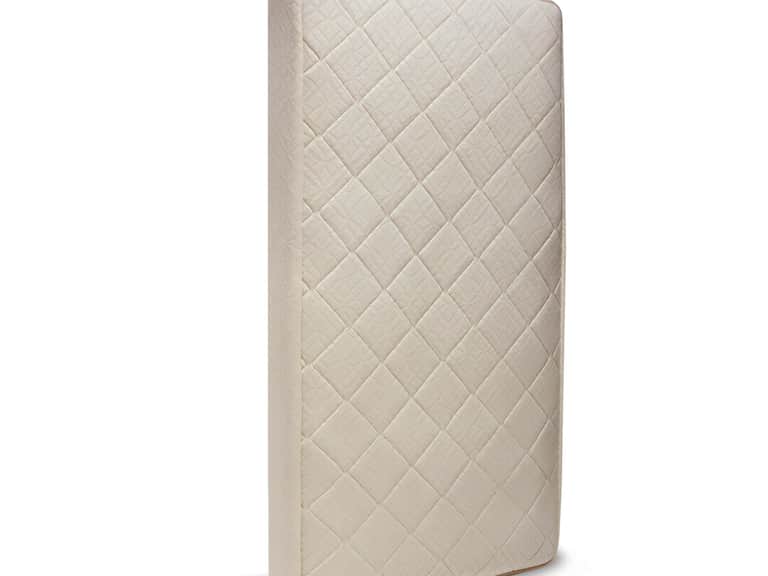
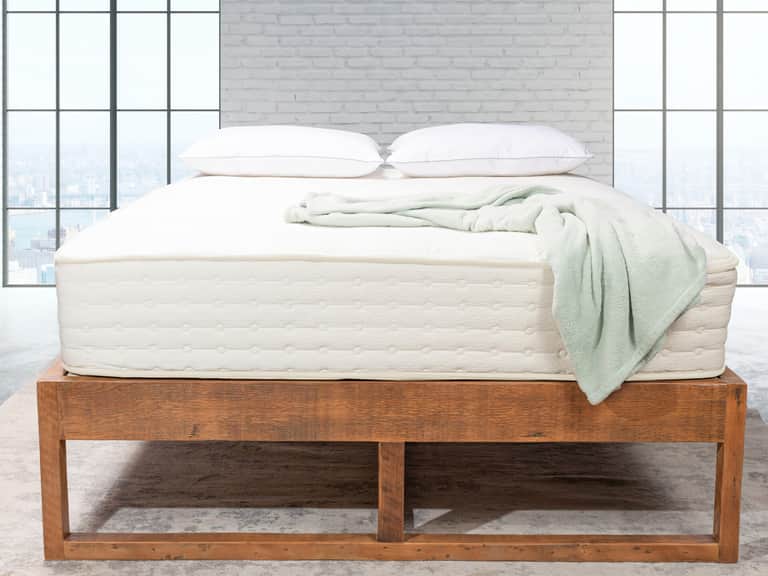
For example, the Naturepedic Ultra Breathable 2-Stage Organic Crib Mattress is described as having a firm, supportive side for an infant and a cushion-firm side for a toddler. Its product information also describes a breathable mattress pad and a waterproof outer surface. These are construction and care details to evaluate against the manufacturer’s current instructions—not substitutes for checking safe use, fit, or the specific configuration intended for your child.
Cleanability is about the whole routine
New parents quickly discover that a clean sleep surface is not an abstract ideal. Leaks, spit-up, and ordinary messes can make mattress care a recurring task. The best design for your household may be one that lets you respond promptly without soaking the mattress or improvising with products the maker has not approved.
A waterproof surface can help keep liquid from reaching the inner materials, while a wipe-clean exterior may simplify spot cleaning. Before buying, read exactly what “waterproof” means in the product description and care guide. Does it refer to the mattress surface itself, a removable cover, or an accessory layer? Is the surface wiped with a damp cloth, cleaned with a specified solution, or handled another way? Confirm whether the product may be immersed or machine-washed; do not assume that it can.
Moisture trapped inside a mattress can be difficult to remove and may contribute to damage or persistent odor. If a spill occurs, act promptly using the maker’s instructions. Avoid saturating the core, using bleach or strong solvents without approval, or applying heat that could damage a barrier or fabric. If the mattress becomes wet internally, has visible mold, or develops a lasting odor, contact the manufacturer for guidance and consider whether it is appropriate to continue using it.
Think about the protective layer as well. A fitted sheet should be the correct size and stay securely in place. If you are considering a mattress protector, verify that it is approved for the mattress and crib, fits tightly, and does not alter the surface in a way the manufacturer prohibits. Additional padding, loose covers, and unapproved accessories can change the sleep setup. A product being labeled waterproof or organic does not automatically make it suitable for every crib mattress.
Care instructions deserve the same attention as the materials list. A removable cover that requires delicate washing may be less convenient for one family than an exterior that can be wiped down. A product’s specific directions take priority over general internet cleaning tips. Keep those directions accessible, especially if another caregiver will be changing the bedding.
It helps to distinguish routine cleaning from sanitizing. Routine care usually means changing the fitted sheet as needed, promptly cleaning spills according to instructions, and allowing components to dry as directed. “Sanitize” can imply a level of germ removal that a household cleaning method may not achieve. Do not mix cleaning chemicals or use disinfectants on a baby’s sleep surface unless the manufacturer says they are suitable and explains how to use them safely.
Fit is measurable—and essential
A mattress must be designed for the crib it will occupy. Even a well-made mattress is not a safe choice if it leaves a hazardous gap, bows against the frame, or does not sit level. Do not rely only on a size name such as “standard.” Check the crib and mattress manuals, confirm the listed dimensions, and follow any instructions for testing the fit.
For a quick visual and hands-on check, place the mattress flat in the assembled crib and inspect the perimeter. It should lie level and fit snugly against the sides. Follow the crib maker’s fit guidance; if you can see a substantial gap, if the mattress shifts excessively, or if an edge curls or buckles, stop and resolve the mismatch before use. Do not try to fill a gap with towels, blankets, foam, or another homemade insert.
Measurements on product pages may be approximate. The Naturepedic two-stage mattress listing, for instance, gives dimensions of approximately 27¼ by 51⅝ by 6 inches and describes it as fitting standard-size cribs. That information is useful for comparison, but it is not a guarantee that the mattress will fit every crib sold under a familiar size description. Check your particular crib’s manual and the mattress manufacturer’s specifications before purchase, then assess the fit once the crib is assembled.
Pay attention to thickness as well as length and width. The mattress should sit correctly within the crib and work with the crib’s intended mattress-support settings. As a child grows, caregivers may need to lower the support platform according to the crib instructions. Mattress thickness and crib configuration can affect the height of the rail relative to the sleep surface, so consult the crib manual rather than guessing.
Fit should be checked again if the mattress is moved to another crib, if a component is replaced, or if the mattress changes shape. A hand-me-down mattress deserves particular scrutiny: inspect its cover, seams, edges, and surface for damage, and confirm that its history, model, and instructions are known. If it is misshapen, torn, wet internally, or otherwise compromised, do not rely on a protector to make it suitable.
Reading organic claims with care
Organic claims can be meaningful, but the details matter. Look for the name of the certifying organization, the standard involved, and the materials or stages of production that are covered. A certification for a textile does not necessarily certify every component in a finished mattress. Similarly, a statement that a mattress contains organic cotton is not the same as a certification covering the finished product.
Compare like with like. Ask whether the claim applies to the cover, fill, or other identified materials, and whether the documentation is current. Read the full product description rather than relying on a badge or a short headline. If a claim is vague, the manufacturer should be able to explain what it means and provide supporting information.
Materials are only one part of the decision. Consider the mattress’s structure, weight, dimensions, warranties, care requirements, and compatibility with the crib. A lightweight model may be easier to lift during bedding changes, while a heavier one may require more effort. Neither characteristic alone determines safety or quality; what matters is whether the product suits the caregiver’s routine and is used as directed.
Allergy language also deserves a measured reading. A product may exclude particular materials, but no mattress can guarantee that a child will not have an allergic response. If your family has specific sensitivities or medical concerns, discuss them with a qualified clinician and confirm the ingredients or materials with the manufacturer. Avoid treating “hypoallergenic” as a universal medical assurance.
The sheet matters, too
A mattress and its sheet work as a system. Use a fitted crib sheet designed for the mattress dimensions, and make sure it is taut and secure after each change. A sheet that slips, bunches, or has excess fabric is not a small styling issue. Check its fit at the corners and around the full perimeter, and replace it if the elastic is stretched or the fabric is damaged.
Fabric preferences are personal. Cotton muslin is often chosen for its light, woven feel and airflow characteristics, while other fabrics may suit different climates or laundry routines. Those features concern the textile; they do not change the basic requirement for a snug fitted sheet and a clear sleep space. Wash new bedding according to its care label before first use, and avoid adding blankets or toppers to make the mattress feel softer.
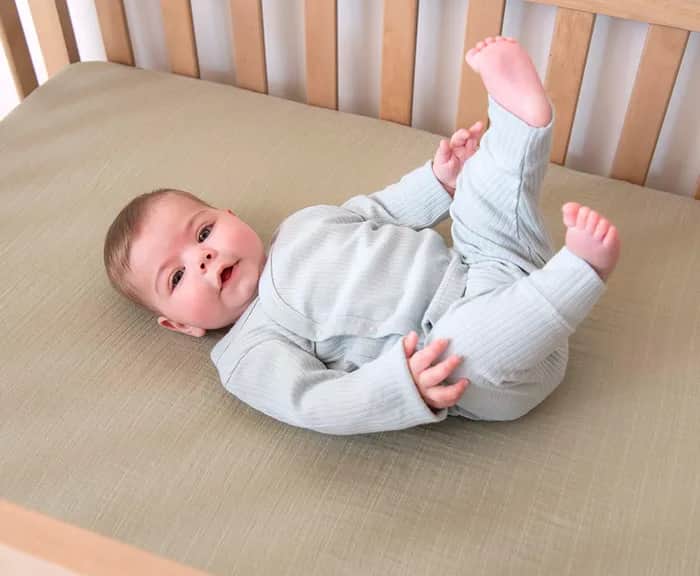
The Naturepedic Organic Breathable Muslin Crib Sheet is described as GOTS-certified organic cotton muslin, with approximate dimensions of 27.5 by 52 by 6 inches. Its care directions specify machine washing warm and tumble drying low, with no ironing or bleach. As with any sheet, compare its dimensions with the mattress and verify that it fits securely; a breathable fabric does not compensate for a loose fit.
A practical comparison checklist
When product descriptions begin to blur together, bring the decision back to a short list. Save the answers from the manufacturer’s specification sheet and compare models against the same questions.
- Firmness and shape: Is the infant sleep surface described as firm, flat, and level? Does the maker explain the intended side or configuration?
- Dimensions: What are the exact length, width, and thickness? Do they match the crib manual and the mattress maker’s fit guidance?
- Surface construction: Which parts are breathable, waterproof, removable, or wipe-clean? What does each claim apply to?
- Cleaning: What should be done after a spill? Can any component be machine-washed, or must it be wiped? What products and drying methods are allowed?
- Materials and certifications: Which materials are identified as organic, and what does any named certification cover?
- Accessories: Are a pad, protector, or specific sheet included or required? Are other accessories prohibited?
- Weight and handling: Can caregivers lift and reposition the mattress for routine sheet changes and crib adjustments?
- Care over time: What are the warranty terms, and how should damage, persistent moisture, or changes in shape be handled?
Use the checklist to identify trade-offs rather than to chase a perfect score. A feature that is valuable to one household may not matter to another. But fit, appropriate firmness, and safe use are not optional preferences. If any of those points is unclear, pause and contact the manufacturer or consult the crib and mattress manuals before using the product.
Common assumptions worth correcting
“Organic means safer in every way.” Organic certification describes defined materials or production practices. It does not replace product-safety requirements, a firm surface, a snug crib fit, or careful use.
“Breathable means the sleep space can include more.” It does not. Keep the sleep space clear of loose objects and follow current safe-sleep recommendations. A mattress feature is not a substitute for those basics.
“Waterproof means I can clean it however I like.” Waterproofing describes resistance to moisture under specified conditions; it does not make every cleaner, washing method, or drying method appropriate. Follow the product instructions.
“Standard size guarantees a snug fit.” Size labels are not a substitute for checking the exact mattress dimensions, the crib manual, and the fit after assembly.
“A washable sheet means the mattress is washable.” Sheets and mattress cores have different care requirements. Wash only the components identified as washable, and do not immerse or saturate the mattress unless its instructions explicitly allow it.
“A two-stage mattress can be flipped whenever it seems comfortable.” Use each side only as directed for the child’s stage. Follow the product instructions and the crib maker’s guidance, rather than relying on appearance or feel alone.
The first-night check and the routine after
Before the mattress is used, read both the crib and mattress instructions from beginning to end. Confirm that the crib is assembled correctly, the mattress rests on the support in the position specified by the crib maker, and the mattress lies flat without a visible mismatch at the edges. Add only a properly fitted sheet unless the manufacturers and safe-sleep guidance clearly permit another component.
For a new mattress, follow any instructions about unpacking, airing, assembly, or first use. Do not invent a waiting period or assume that an odor will disappear after a particular number of hours. If a smell seems strong or persistent, contact the manufacturer and follow its advice before placing the mattress in the sleep space.
During routine use, keep care simple. Change the sheet when soiled, address spills promptly using approved methods, and inspect the mattress periodically for tears, dampness, sagging, or changes in shape. Store spare bedding clean and dry. If several caregivers share responsibility, make the mattress instructions and safe-sleep routine easy for everyone to find.
Replacing a mattress should not be an automatic response to every minor mark, but visible damage or a compromised surface deserves attention. Contact the maker with the product model and a description of the problem. If the mattress cannot be cleaned or restored according to its instructions, or no longer lies flat and fits correctly, do not continue using it for infant sleep.
A calmer way to choose
The strongest crib-mattress decision is usually the least theatrical one. Begin with safety and fit. Then compare how the mattress is built, which materials and certifications are documented, and whether the cleaning routine makes sense for your household. Treat breathability as a construction detail to understand—not a promise that changes safe-sleep rules. Treat waterproofing as a care advantage with limits. Treat organic claims as information to verify, not a shortcut around the rest of the evaluation.
One product may combine a firm infant surface, a breathable component, a wipe-clean waterproof exterior, and a later toddler side. Another may use a simpler construction that better suits a family’s needs. Neither a long feature list nor a premium label can decide the question alone. The right choice is the mattress that fits the crib snugly, remains flat and firm for its intended use, and can be maintained according to clear instructions.
Once those fundamentals are settled, the nursery can become less about decoding marketing language and more about a dependable routine: a clean fitted sheet, a clear sleep space, and a mattress used exactly as intended. That is the kind of everyday clarity a caregiver can return to at midnight, when the most useful feature is not a slogan but knowing what to do next.